Looking Back at Demigod: The MOBA That Almost Changed Everything
We revisit Demigod, the 2009 fantasy strategy game that paved the way for modern MOBAs with its bold, titan-sized combat.
I still remember the first time I loaded up Demigod. It was 2009. Everything felt massive, loud, and weirdly empty at the same time. You weren't just some random soldier. You were a giant. You were a force of nature.
The game felt like a fever dream of gods and giants. It took the frantic energy of Warcraft 3 custom maps and turned it into a standalone spectacle. It didn't just borrow ideas. It tried to invent a new way to fight online.
But it had problems. It didn't hold your hand. It didn't even try to explain why you were there. You just fought. Honestly, that was part of the charm.
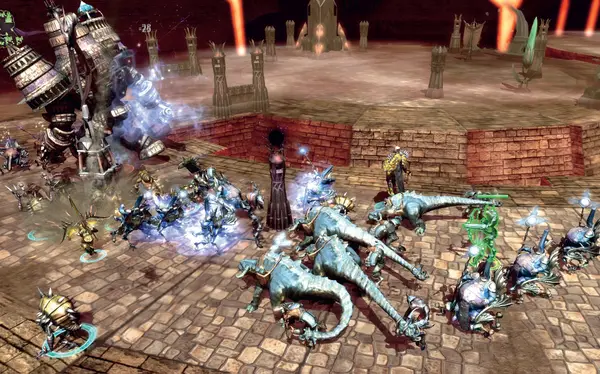
Where the gods went to war
Back in 2009, the industry was obsessed with RTS games. We had plenty of base-building and resource management. Gas Powered Games decided to cut the fluff. They stripped away the workers and the farms. They focused on one hero.
This was the dawn of the MOBA as a genre. It arrived months before League of Legends took over the world. It felt like the future. You had these eight unique demigods fighting for a vacant throne. The stakes were high, even if the plot was thin.
The art style leaned into that classic 2000s brown-and-grey aesthetic. It felt serious. It felt heavy. It wanted to be a mature take on the fantasy genre. Looking at it now, it's a time capsule of a specific moment in PC gaming.
You didn't have a massive campaign to guide you through the lore. You had skirmishes. You had tournaments. You had AI bots that were surprisingly tough. You picked your god, you hit the map, and you prayed your team knew what to do.
The art of the titan clash
The core loop was simple. You walked out, you killed minions, and you grabbed flags. Capturing territory was the name of the game. It was a tug-of-war for control points. If you held the ground, you won.
Your demigod was your base. That was the big hook. You didn't build barracks. You bought gear. You leveled up. You picked talents. If you played as the Rook, you literally became a moving castle. It was brilliant.
Other heroes felt just as wild. Regulus was a sniper who felt weak at first. Once you got the right items, he became a nightmare to face. He could drop mines and pick off enemies from across the map. It felt rewarding to master him.
The maps were small but packed with detail. You fought on floating platforms and giant, coiled snakes. The scale was huge. Everything looked epic in the heat of battle. You'd see giants and priests throwing spells everywhere.
But the game didn't tell you how to win. There was no tutorial. You learned by doing. You learned by losing. That barrier to entry was a wall for many players. You either figured it out or you left.
Still, when a match clicked, it was magic. You were a titan. You were smashing through armies. You were leveling up your skills until you felt unstoppable. It was a pure, chaotic joy that few games have matched since.
Under the hood of a forgotten classic
The tech requirements were modest. You needed a 2GHz CPU and 1GB of RAM. It ran well on most rigs of the time. It used Stardock's own service for multiplayer, which was a bold move back then.
It didn't have any heavy copy protection. That was rare for 2009. It showed a lot of trust in the audience. The game felt like a passion project from start to finish. It wasn't designed by a committee.
The balance was always in flux. Some heroes felt broken. Others felt useless until you hit the late game. That was part of the fun. You spent hours debating which god was the best. You lived in the forums.
It was a game built for the hardcore. It was a game that rewarded time and effort. If you didn't put in the hours, you didn't stand a chance. It was a brutal but fair training ground for the MOBA era.
Why it matters today
We look back at Demigod as a missed opportunity. It had the right ideas. It had the right style. It just lacked the polish and the community support to last. It was a pioneer that got lost in the shuffle.
It proved that people wanted more than just base-building. It proved that hero-centric combat was the future. It set the stage for everything that followed. Even if it's gone, its DNA is everywhere in the games we play today.
Maybe it was too early. Maybe it was too messy. But it was a brave experiment. It dared to be different. It remains a high point for anyone who loves chaotic, god-tier combat.
Quick questions answered
Was Demigod a true MOBA? It was the bridge between custom map mods and modern standalones. It fits the definition perfectly.
Could you play it offline? Yes. The AI skirmishes were the best way to learn the game.
Is the Rook the best character? He is the most iconic. He's great for beginners because he's durable and easy to understand.
Did it have a story mode? No. It relied on the flavor text of the gods and the setting of the arenas.
Why did it fade away? A lack of a tutorial and stiff competition from newer titles made it hard to keep a player base.
My honest take on this
I think Demigod deserves way more respect. It was a bold, weird, and messy game. I loved every second of it. We spent so many nights playing it in the office. It felt like we were part of something new.
The thing that gets me is the design. A moving castle as a hero? That's genius. Most games play it safe. Gas Powered Games did not. They took a massive swing. Even if they missed, I respect the attempt.
I think the lack of a tutorial was a mistake. It stopped so many people from seeing the brilliance underneath. You shouldn't have to read a manual to know how to play. That killed the game's momentum early on.
Honestly, my take is that we need more games like this. We need weird, experimental titles that don't care about trends. Demigod wasn't perfect, but it had soul. That's more than I can say for most modern games.