Dungeons and Dragons: 10 Subclasses That Break the Game
Are your D&D characters too strong? Here are 10 subclasses from 5.5e and 5e that might make your Dungeon Master sweat.
I have spent countless hours at the table watching players turn encounters into jokes. We've all seen it. You spend weeks planning a boss fight, only for a single subclass to ruin your plans in one round. It's a classic problem in Dungeons and Dragons.
Some character options just pack too much punch. They bend the rules. They break the math. Sometimes, they make the game feel a bit too easy.
I'm looking at the best of the bunch today. These are the subclasses that make DMs nervous. Buckle up, because things are about to get messy.
The evolution of power in your game
Building a character in Dungeons and Dragons is always a mix of flavor and math. You pick a class, then you pick a subclass. This choice defines how you play. It sets your role in the party.
In the old days, choices were simple. Now, we have endless options. Books like Eberron: Forge of the Artificer changed how we view utility. New rulesets like 5.5e try to fix the balance. Yet, some things never change.
Power creep is real. Designers try to make new things feel exciting. Sometimes they go too far. We end up with subclasses that outshine everyone else. It's part of the game's history.
Do you want to play a character that feels like a god? These options are your best bet. Just don't be surprised when your DM sighs at your character sheet.
When character choices become unfair
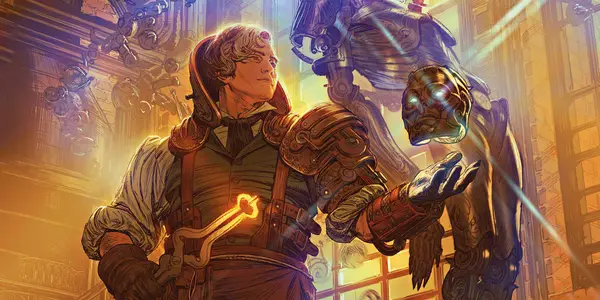
Let's start with the Battle Smith Artificer. Most people ignore them. That's a mistake. They craft weapons and hit hard. Plus, they get a Steel Defender. It's like a pet that helps in a fight.
Then we have the Path of the World Tree Barbarian. They are absolute tanks. They soak up damage like a sponge. They also protect their friends. If you want to annoy a DM, play one of these.
The Grave Domain Cleric is another beast entirely. They can stop critical hits. Imagine a big boss attack landing, only for the Cleric to say "no." It saves lives. It also ruins the tension.
Don't forget the Circle of the Moon Druid. They stay in animal form forever. They get extra health. They hit like a truck. They are the ultimate frontline fighters.
Finally, we have the Oath of Vengeance Paladin. They are terrifying. They use Vow of Enmity to gain advantage on everything. They don't miss. It's a simple, brutal way to win.
And what about the Gloom Stalker Ranger? They own the dark. They strike first. They hit hard. In the right cave, they are unstoppable.
Breaking down the math and mechanics
Why are these so strong? It comes down to action economy. In Dungeons and Dragons, actions are your currency. If you get more for less, you win.
The Vengeance Paladin is a prime example. They use a bonus action to gain advantage. That's a massive boost for a tiny cost. They don't have to sacrifice their main attack. It's efficient.
The Grave Cleric works by nullifying enemy rolls. You negate the "crit" mechanic. That is one of the few ways to make a DM truly angry. It changes the math of the encounter entirely.
The Moon Druid relies on raw health pools. You shift into a bear. You take damage. You shift again. You have effectively infinite health at low levels.
Looking ahead at future balance
Wizards of the Coast is always tinkering. They release new books constantly. We have Ravenloft: The Horrors Within coming soon. It brings new stuff like the College of Spirits Bard.
Will these fix the balance? Maybe. Maybe not. The game is massive. It's hard to keep everything in check. That's why we have house rules.
I think the best games don't worry about being "broken." They focus on the fun. If your player wants to play a Gloom Stalker, let them. Just make sure the monsters are ready.
Common questions about broken builds
Are these subclasses banned in most games?
Rarely. Most DMs allow them. They just adjust the encounters to match the challenge.
Is the Moon Druid still good in 5.5e?
Yes, but it's different. They changed the transformation math. It feels less like a tank and more like a utility caster now.
Why is the Gloom Stalker so fast?
It's the subclass features. They get bonuses to initiative and movement speed. It makes them the first to act in almost every fight.
Can a Grave Cleric save the whole party?
Absolutely. Their ability to stop critical hits is unique. It prevents the random "one-shot" deaths that ruin campaigns.
Does the Steel Defender make the Artificer too strong?
It adds a lot of utility. It can heal, attack, and block paths. It's a very versatile tool for any party.
My honest take on these builds
I think people get too hung up on "broken" stuff. It's a game, not a test. If you want to play a Vengeance Paladin, go for it. Just make sure you roleplay the "vengeance" part.
The thing that gets me is how players complain about balance. They want to be strong. Then they complain when the game is too easy. I think we need to stop worrying about the numbers.
Honestly, my take is that the DM is the real balancer. If I am running a game, I don't care if a player is "overpowered." I just add more goblins. It's simple.
I prefer a game that lets me be a hero. These subclasses provide that. If you want to play a weak character, that's your choice. But I'm taking the Battle Smith every single time.