How Hamdi Osman is Changing Gaming Art with Painted Wigs
Discover how artist Hamdi Osman transforms wigs into canvases for iconic video game scenes, blending hair styling with digital nostalgia.
Most of us change our hair to feel fresh or try a new look. We might bleach it blonde or dye it black on a whim. I once went through a bright pink phase during my college years that I definitely do not need to repeat. Hair is usually just something we grow, cut, or color to suit our mood for a month or two.
But what if your hair could tell a story? Some people are now using wigs as a blank canvas to show off their favorite hobbies. It turns out that some artists are not just styling hair, but painting entire worlds onto the fibers themselves. It sounds strange, but the results are mind-blowing.
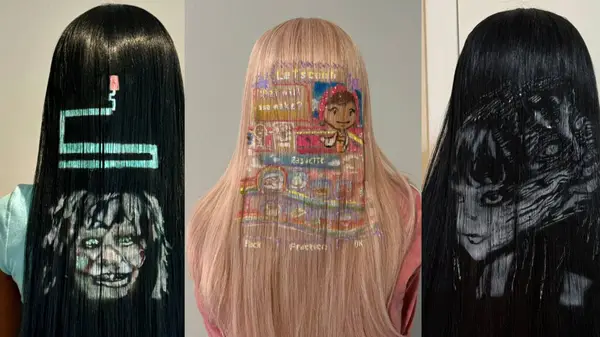
Hamdi Osman is one artist who has taken this concept to a new level. By painting classic video game scenes onto the back of wigs, they have turned hair into a wearable piece of art. This is not just a simple doodle on a few strands; these are full-scale, detailed recreations that demand your attention.
The evolution of creative hair styling
The history of wigs is long and varied. They started as status symbols for the elite and moved into the realm of theater and costume. Today, they serve as a massive part of the cosplay scene. When you head to a convention, you expect to see high-quality wigs that match the character perfectly. Color matching and heat styling are the bare minimum requirements for a good cosplay look.
Osman saw this space and decided to push the boundaries of what is possible. Instead of just picking a color to match a character's hair, they started treating the wig like a traditional painting surface. This shift moves hair from a costume accessory into a medium for storytelling. It is a bold move that separates a standard costume piece from a gallery-worthy item.
This kind of work draws on the nostalgia that so many of us feel for the games we played as kids. When you see a scene from Super Mario 64 (1996) painted on a wig, it hits you differently than a digital screenshot. It has a tactile, human feel that digital art sometimes lacks. It bridges the gap between old-school gaming and modern fashion in a way that feels fresh.
Bringing digital worlds to life on hair
The process starts with choosing the right base. Osman does not just pick any wig off the shelf; the color must serve the painting. For a Sonic the Hedgehog piece, a deep blue wig provides the perfect backdrop. The paint then has to be applied in a way that handles the movement of the hair without cracking or flaking. It is a delicate balance of art and engineering.
Osman's portfolio does not stop at gaming. You can find nods to movies like Us or even album covers like The Black Parade by My Chemical Romance. Still, the gaming pieces stand out because of the way the game's UI and level geometry translate to the medium. Seeing the Xbox 360 dashboard on a wig is a trip back to a simpler time in tech history.
Working on hair is much harder than working on a flat piece of canvas. Hair moves. It has texture. It absorbs pigment differently than fabric or paper. Osman has to account for the way the fibers sit against each other to ensure the image remains clear. If the wig is styled with curls or layers, the artist has to map the image perfectly so it does not distort when worn.
The detail is what keeps people coming back to look at the photos. You can see the individual blocks in a Green Hill Zone painting. You can see the specific color palette of a Cooking Mama screen. clearly, Osman spends a massive amount of time planning the layout before the brush even touches the synthetic fibers.
This work is an example to the fact that gamers are some of the most creative people on the planet. We spend our lives looking at screens, but we also love to find ways to bring those virtual experiences into our physical world. Whether it is through collecting figures or, in this case, wearing a game on your head, the passion is evident.
It makes me wonder what other surfaces we might see art on in the future. If a wig can hold a full level of a game, what is next? The limit seems to be only the imagination of the artist and the patience they have to sit through the tedious process of painting individual strands.
The technical challenges of fiber art
Painting on hair is a technical nightmare for most. Synthetic hair fibers are usually smooth and do not always hold paint well. To get the detail seen in these pieces, the artist likely uses specialized pigments that can bond with the material without making it stiff or crunchy. A wig that is meant to be worn needs to retain some of its natural bounce and flow.
Another big issue is the scale of the work. A game screen is wide and horizontal. A human head is round. Mapping a flat image onto a curved, moving surface requires a high level of skill. One wrong stroke and the perspective of the entire scene could be ruined. Osman clearly has a background in fine art, as the proportions in these works are consistently spot on.
The time investment is likely massive. Before the painting starts, the wig has to be cut and styled. After the painting is finished, it likely needs a sealant to prevent the colors from rubbing off on the wearer's neck or clothes. It is a multi-step process that requires more patience than I think I could ever muster for a single project.
Future trends in wearable gaming art
Where does this go from here? As more people see this work, we might see a rise in custom-painted wigs for gaming events. Imagine walking into a convention center and seeing dozens of people wearing hair that displays their favorite maps or character portraits. It would turn the crowd into a walking, living museum of gaming history.
We are already seeing a push for more personalized tech, like custom phone skins or console covers. Why not extend that to our hair? It is a way to wear your heart on your sleeve—or rather, on your head. It is a bold statement, but gaming culture has always been about being bold and showing off what you love.
I hope Osman continues to expand the collection to include even more obscure titles. The mention of Poptropica was a great surprise, and it makes me think about all the other browser games that shaped our childhoods. There is a lot of room for growth here, and I look forward to seeing what the next project will be.
Frequently asked questions
Can you wash a wig that has been painted like this?
Generally, no. These are art pieces rather than everyday items. Washing them would likely strip the paint or cause the fibers to tangle, ruining the image.
What kind of paint does the artist use?
While the exact brand is a secret, most artists working on synthetic hair use fabric paints or high-grade textile markers that bond to plastics and nylon fibers.
Are these wigs comfortable to wear?
They are designed for display or short-term wear at events. Because of the layers of paint, they might feel a bit heavier than a standard, unpainted wig.
Does Hamdi Osman take commissions?
As of now, there is no official word on commissions. Most of these pieces are passion projects created for the artist's own portfolio and social media reach.
How long does one wig take to complete?
Given the level of detail and the need to style the hair around the image, each piece likely takes anywhere from a few days to several weeks to finish.
Expert take: my perspective
The thing that gets me is how we often ignore the artistic side of gaming culture. We talk about specs and frame rates, but we forget that gaming is a visual medium that inspires actual art. Seeing someone take a wig and turn it into a canvas for Super Mario 64 makes me realize that we are finally moving past the era where gaming was just a hidden hobby.
I think this is the peak of fan expression. It is one thing to buy a shirt with a logo on it, but it is another thing entirely to spend hours painting a scene onto synthetic fibers. It shows a level of dedication that is rare. I have total respect for the patience required to pull this off without making a mess.
I also love that Osman chooses games that are not just "popular" right now. They pick games that hold personal meaning. The Xbox 360 dashboard choice was a stroke of genius. It hit me right in the nostalgia. It reminds me that our gaming history is worth preserving, even in weird ways like this.
If you ask me, we need more of this in the world. Too much of what we buy today feels mass-produced and soulless. When I see a hand-painted wig, I see a human being behind the screen. I see someone who cares enough about a game to spend weeks turning it into something they can wear. That is the kind of passion that keeps gaming alive.