How the Iran Conflict is Disrupting Your Next PC Build
We look at how global supply chain issues and the Iran conflict are causing massive price hikes for your favorite PC components and gaming hardware.
You're probably eyeing that new GPU or planning a fresh rig for the summer. I get it. We all want the latest frame rates. But there's a massive problem brewing behind the scenes.
The Iran conflict is hitting hard. It's not just oil prices going up at the pump. It's reaching deep into the tech we use every single day.
Think about your PC. It needs chips, boards, and metal. All of that is getting harder to find and much more expensive. Let's talk about why your next upgrade might cost way more than you planned.
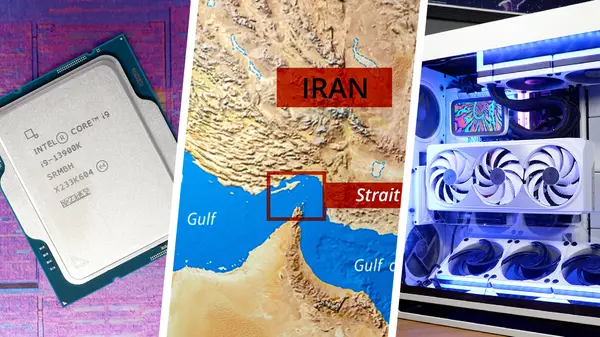
The global web of tech parts
Modern manufacturing is a delicate game. We rely on parts moving across the world in perfect order. When one hub stops, the whole system feels the pain. It's a chain reaction.
The Strait of Hormuz is a massive bottleneck. A huge amount of global trade flows through this tiny gap. When that gets blocked, shipping costs skyrocket. Ships have to go the long way around. That adds weeks to delivery times.
It's not just about shipping, though. The region is a key source for raw materials. When factories in Saudi Arabia or Qatar get hit, the ripple effect is instant. We're seeing shortages in things most people never think about until they're gone.
Why your PC parts are vanishing
Let's talk helium. You might think it's just for birthday balloons. To a chip maker, it's a vital tool. They use it to cool wafers during etching. Without it, production stops dead.
Qatar is a massive player in the helium market. When their energy sites face trouble, the world supply drops. Experts tell me there is no easy replacement. If you can't cool the wafer, you can't make the chip.
Then there is sulphuric acid. It's used to clean wafers and etch circuit boards. If the supply chain for this chemical breaks, it affects everything from your CPU to your motherboard. It's a foundational piece of the puzzle.
We're also looking at PPE resin. This stuff glues the layers of your PCB together. Since a key facility in Saudi Arabia faced strikes, prices for boards have jumped. Some reports say a 40% hike already.
It's not just the chips themselves, either. Aluminium is getting scarce. Your GPU heatsink and your PC case rely on this. When supply drops, the price for your next chassis goes up.
Everything is connected. When you pull one thread, the whole thing starts to unravel. We aren't just talking about a minor delay. We are talking about a major shift in how parts reach your desk.
The science behind the shortage
Semiconductor manufacturing is basically high-end chemistry. You need precise solvents to make photoresists work. These are the light-sensitive plastics used to print circuit patterns.
These solvents require hydrocarbons. These come from oil and gas. When the energy sector faces chaos, the chemical supply chain gets hit. Naphtha is one such compound that is now in short supply.
Think of it like cooking. You need the right ingredients to make a sauce. If the store runs out of base components, the whole dish fails. In this case, the dish is your next gaming rig.
What this means for gamers
You're going to see higher prices on shelves. It won't happen all at once. But over the next few months, your wallet will feel it. Budget builds will become much harder to piece together.
Availability will also be a major headache. You might find the GPU you want is out of stock everywhere. It's a frustrating cycle for everyone involved. We're in for a rough year of hardware hunting.
Companies are trying to adapt. They are looking for new suppliers. They are trying to hoard what they have. But it takes time to switch. You can't just flip a switch and fix a broken global supply chain.
Quick questions answered
Are all PC parts going to be expensive? Not every single part, but core items like CPUs, GPUs, and motherboards are the most vulnerable due to the specific chemicals needed for their production.
Is this just about the shipping routes? No, it's about both the shipping routes and the actual production facilities being directly impacted in the Middle East.
Should I buy my parts now? If you have the cash and you're planning a build, waiting might be a bad bet. Prices are trending upward as supply tightens.
Will this end soon? Unlikely. Even if the conflict stops tomorrow, the damage to the supply chain will take months to clear out.
Are laptops affected? Yes, because they use the same aluminium and PCB components as desktop PCs. Expect to pay more for mobile gaming units too.
My honest take on this
Honestly, I'm frustrated. It feels like we just got over the last round of hardware shortages. Now we're looking at another wall. It's a tough time to be a PC builder.
I think the most important thing is to be smart. Don't panic-buy everything, but don't assume prices will drop soon either. If you see a deal on a part you really need, grab it.
The thing that gets me is how invisible these chemicals are. Most people just see a graphics card. They don't see the helium or the resin behind it. It really shows how fragile our tech world is.
I'm going to hold onto my current rig for a bit longer. I say you do the same if you can. It's going to be a bumpy ride for the hardware market.