Mixtape and the Reality of Review Scores: Why Gamers Are Fighting Over Nostalgia
We look at the heated debate surrounding Mixtape, why review scores vary, and how nostalgia impacts our perception of modern gaming experiences.
I recently finished playing Mixtape. It is a game that sticks with you, but not necessarily for the reasons you might expect. After credits rolled, I made the mistake of hopping online to see what the rest of the world thought. I expected a quiet conversation about mechanics and music. Instead, I found a digital firestorm.
The internet has a way of turning every creative work into a battleground. Mixtape found itself caught in a mess of claims about astroturfing and fake indie status. It is a strange fate for a game that just wants to talk about being a teenager. People are fighting over it with a level of intensity that feels completely disconnected from the actual experience of playing it.
I gave the game a 74. Some outlets gave it a ten. Others gave it a four. This range of scores is perfectly normal for a piece of art that leans so heavily into a specific mood. Yet, the discourse suggests that if you do not love it, you are part of a conspiracy. If you do love it, you must be a paid shill. Let us look at why this happens.
The heavy weight of publisher origins
Much of the heat directed at Mixtape comes from its publisher, Annapurna Interactive. It is no secret that Annapurna was founded by Megan Ellison. Her father is Larry Ellison, the boss at Oracle. People have pointed out his financial support for the Israeli Defense Forces as a reason to avoid the game entirely.
This is a valid stance for any player to take. You have the right to decide where your money goes. If you choose to boycott a product based on the politics of the people behind it, that is your choice. Nobody should try to shame you for how you spend your cash. However, that is not where the conversation stayed.
The argument shifted from personal ethics to claims of foul play. Critics started saying the positive reviews were bought or pushed by the publisher. This ignores the fact that Annapurna is clearly listed on the store page. There is no secret here. It is just a publisher doing its job for a developer, Beethoven & Dinosaur.
Calling a developer a "fake indie" because they have a budget for licensed music feels like a reach. Making games is expensive. Just because a game has a polished look and a massive soundtrack does not mean the team behind it is being dishonest. Sometimes, a story about growing up just happens to be backed by a large checkbook.
The nostalgia trap and cultural divide
At its heart, Mixtape is a game about the past. It tries to capture that specific feeling of being young in a way that feels both universal and deeply personal. It presents a version of the 1990s that feels like a dream. It is bright, loud, and full of the kind of music that defines your early years.
Some players will find this version of the nineties hits home. If you grew up in a similar suburban environment, the game might feel like a warm blanket. It hits those emotional notes perfectly. You see the characters and you see yourself. That is why some reviewers call it a masterpiece.
Others will look at it and feel nothing. I grew up in the UK, and my teenage years were not filled with the same aesthetic polish. We had cider in the park and messy house parties. When I look at Mixtape, I see a beautiful drama, but it does not mirror my own life. That disconnect is not a flaw in the game.
It is just how art works. Some people are looking for a specific kind of memory, and this game provides it. Others are looking for something else. When a game relies this much on a specific mood, it is bound to polarize the crowd. That is not a "culture war." It is just a difference in taste.
The "woke" accusations are just as tired as the conspiracy theories. The game is not trying to preach a massive social message. It touches on family dynamics and identity, but it keeps those themes grounded in the personal lives of its characters. It is a coming-of-age story, not a political manifesto.
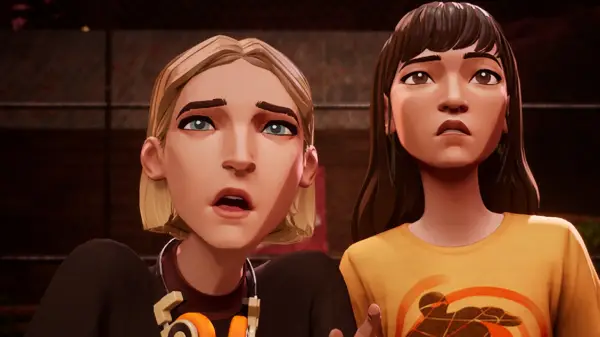
Stacy Rockford's journey is a great example. She is clearly navigating her own identity, but the game does not stop to lecture the player about it. It just lets her be. That is good storytelling. It feels organic rather than forced.
Technical realities of modern development
When you look at the technical side, Mixtape is a product of modern production values. The licensed music is a massive part of the budget and the experience. You cannot have a game about mixtapes without paying for the rights to the tracks. That requires a level of funding that standard indie studios often struggle to secure.
This is where the idea of the "indie" label gets messy. We tend to think of indie games as being made by three people in a garage. But the market has changed. We now have mid-sized studios working with publishers to create high-quality experiences that sit between the massive AAA titles and the tiny passion projects.
The visual style of Mixtape also requires a dedicated team of artists. It is not just about the code. It is about the lighting, the models, and the way the world feels. When you play it, you can see where the money went. It is a polished product, which is something we usually ask for in games.
If you compare this to a truly low-budget project, the difference is obvious. But that does not make it "fake." It just means it had the resources to reach a higher level of finish. We should be judging the game on how it plays, not on the size of the team or the bank account of the publisher.
Looking toward the future of gaming discourse
What does this mean for the future of game reviews? I think we need to get comfortable with the idea that not every game is for everyone. It is okay for a game to be divisive. It is okay for a game to have a 74 on one site and a 100 on another. That is healthy.
The obsession with finding a "correct" score is what kills the fun. We are so focused on whether a game is objectively good that we forget to ask if it is good for us. If you like Mixtape, great. If you don't, that is also fine. Neither of those opinions makes you a bad person or a shill.
I hope we can move past these petty fights. The gaming industry is big enough for all kinds of stories. We have room for games that are cynical and games that are sweet. We have room for games that challenge us and games that just want to make us remember the music we loved at sixteen.
Let the critics argue. Let the fans debate. But let's stop pretending that a difference of opinion is a sign of a broken industry. It is just proof that we are all looking for something different when we sit down to play.
Frequently asked questions
- Why are people fighting about Mixtape? The discourse stems from a mix of political objections to the publisher and a misunderstanding of what defines an indie game.
- Is Mixtape a political game? No, it focuses on personal relationships and nostalgia rather than pushing a heavy political agenda.
- Why do review scores vary so much for this game? The game relies heavily on personal nostalgia, which resonates differently depending on the player's own life experiences.
- Is there a conspiracy behind the positive reviews? No evidence supports the idea of astroturfing. Different outlets simply have different tastes and standards.
- Should I play Mixtape if I don't care about 90s nostalgia? You might still enjoy the character drama, but the core appeal of the game is deeply tied to that specific time period.
Expert take: my perspective
The thing that gets me is how we treat opinions as if they are facts. I think we have lost the ability to say, "I didn't like this, but I see why others do." Instead, the internet demands that we pick a side and defend it until the end of time.
I personally found Mixtape to be a beautiful piece of work, even if it didn't fully capture my own teenage years. The music is great, and the art style is bold. Is it a ten out of ten? I don't think so. But is it a bad game? Absolutely not.
I think the real problem is that we look at review scores like they are stock prices. If a game gets a high score, it is "winning." If it gets a lower score, it is "failing." This mindset ruins the nuance of critique. A 74 is a good game, and it is perfectly fine to stop there.
I would rather read a review that explains why the person felt the way they did, rather than just arguing over the final number. If we focus on the experience rather than the score, maybe we can have better conversations about the games we play.