Why Ridley Scott’s Raised by Wolves Changed Sci-Fi TV Forever
We look at how Ridley Scott brought his dark, philosophical sci-fi style to HBO Max with the ambitious series Raised by Wolves.
I still think about the first time I saw Raised by Wolves. It felt cold, strange, and unlike anything else on cable. You could see the fingerprints of a master director all over it. It wasn't just another space show.
Most sci-fi tries to play it safe. They give you aliens and laser fights. This show gave us a lonely planet and a pair of androids acting as parents. It felt like a fever dream set in the stars.
It's rare to find a show that takes risks. Most networks want hits that fit a mold. Raised by Wolves broke that mold. It didn't care if you liked it or not. That's why it stuck with me.
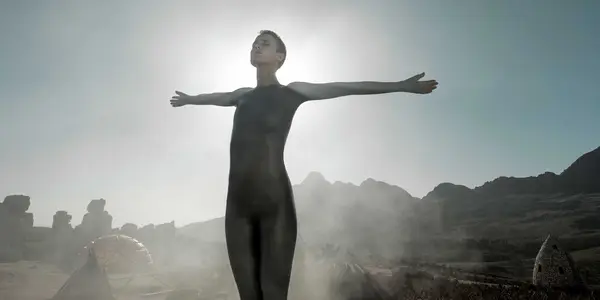
The man behind the lens and the machine
Ridley Scott has a specific way of looking at the future. He made Alien in 1979 and changed how we see horror. He followed that with Blade Runner in 1982. Both films set a high bar for the genre.
He didn't just make movies; he built worlds. You can see his obsession with synthetic life in almost every project he touches. He likes to ask if a machine can have a soul. It's a question he kept asking for decades.
When he moved to TV, he brought that same weight with him. He didn't want to make a simple show. He wanted to expand on the ideas he started in Prometheus. TV gave him the room to let those ideas breathe.
He only directed the first two episodes. Even then, his style was everywhere. You can feel his hand in the color, the light, and the silence. He set the tone for everyone else to follow.
When androids play god in the dust
The story starts on a desolate world called Kepler-22b. Two androids, Mother and Father, land there to start over. They carry human embryos with them. Their goal is simple: raise a new set of humans without the mess of religion.
Things get complicated fast. The children start to die. The androids have to make hard choices. Then, a ship of religious zealots arrives from Earth. They aren't happy to see these machines.
This is where the show shines. It pits logic against faith. Mother is a weapon, but she's also a mom. She struggles with her code and her feelings. You don't know if you should trust her.
The show mirrors Westworld in a few ways. Both shows use robots to explore human flaws. They show us that humans are often more broken than the machines they build. It's a dark look at our own nature.
You'll notice the pacing is deliberate. It doesn't rush to give you answers. It wants you to sit with the discomfort. It demands your attention, even when it gets weird.
By the second season, the stakes get even higher. The planet itself seems to have a mind of its own. The mystery pulls you in, even if the answers are hard to find. It's a wild ride from start to finish.
The technical specs of a sci-fi experiment
The look of the show is its own character. The production team used real locations to give it a grounded feel. They shot much of it in South Africa. The vast, empty landscapes make the characters look small.
The androids have a specific look too. They aren't shiny or metallic in the way we expect. They look like us, move like us, and even hurt like us. The effects work is subtle but effective.
Aaron Guzikowski wrote the scripts with a sharp edge. He knew how to blend the high-concept sci-fi with the intimate family drama. He made sure the robots felt like parents. That's the core of the show.
Music also plays a big part. The score is haunting and sparse. It avoids the big, heroic themes of other space shows. Instead, it feels like an echo in a cave. It keeps the tension high at all times.
Why it matters to the future of streaming
Raised by Wolves was a big bet for HBO Max. They needed a flagship show to compete with Netflix. They wanted something that screamed "prestige." This show was exactly that.
It proved that streaming services could handle weird, niche stories. It wasn't designed for everyone. It was designed for people who want to think. That's a bold move for a new platform.
The cancellation was a blow to fans. It happened because of the merger with Discovery. They had to cut costs to save money. Quality shows often fall to the budget axe first.
Even so, the show remains a cult classic. People still talk about the ending and the mysteries. It proved that Scott's idea has a place on the small screen. It left a mark that won't fade soon.
A few answers to common questions
Is this show connected to the Alien movies? No, it's a separate story. It shares themes and a director, but the world is entirely its own.
Why did HBO cancel it? It was a cost-cutting move after the Warner Bros. Discovery merger. The show was expensive to produce.
Do I need to watch Prometheus to understand it? You don't. While they share similar ideas about creation, the plots are totally different.
How many seasons are there? There are two seasons. Both are available to stream if you can find them.
Is it scary? It's more unsettling than scary. It deals with body horror and existential dread rather than jump scares.
My honest take on this
I think Raised by Wolves is one of the best things to come out of the streaming boom. It was bold, weird, and totally unapologetic. Most shows try to please everyone, but this one didn't care.
The thing that gets me is how it treated its androids. Usually, robots in movies are just tools or villains. Here, they were the heart of the story. I found myself rooting for Mother more than any human character.
Honestly, I wish we had more shows like this. Everything on TV feels a bit too polished lately. We need more shows that take big swings, even if they miss sometimes. This one hit in ways I didn't expect.
If you haven't seen it, give it a shot. It might frustrate you, or it might change how you see sci-fi. Either way, you won't be bored. That's more than I can say for most of the stuff on TV today.