Sony’s New AI Camera Assistant Is Struggling To Prove Its Worth
Sony is defending its AI Camera Assistant on the Xperia 1 XIII after users mocked the poor quality of its photo suggestions.
I've seen plenty of tech brands try to push smart features into our pockets. Most of the time, they miss the mark. Sony is the latest one to face the music with its new AI Camera Assistant feature. It's meant to help you take better shots, but the results are just a bit odd.
You'd think a big name like Sony would have this nailed down by now. They make top-tier sensors for almost everyone else in the phone business. Yet, when they try to bake smarts into their own software, things get messy fast.
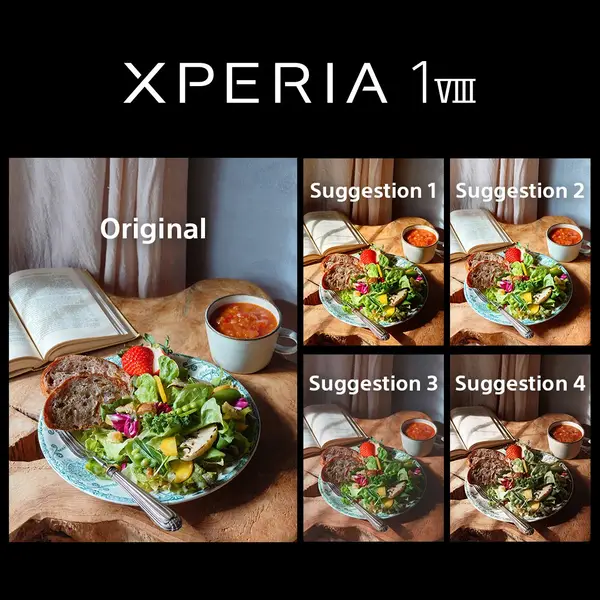
I looked at the latest samples they shared online. Honestly, they don't look like they were made by a tool meant to help. It feels more like a random filter generator that lost its way. Let's dig into why this is happening and if it can be saved.
Why sony wanted a smarter way to snap photos
The Xperia 1 XIII is a beast of a device on paper. It has all the specs you'd want for a pro-grade mobile rig. Sony wanted to make sure that even casual users could get those pro looks without touching manual settings. That is where the AI Camera Assistant comes into play.
They built this tool to analyze scenes in real time. It looks at the light, the depth, and the subject. Then, it gives you four different ways to edit that specific shot. It's a bold move to try and automate what photographers usually spend years learning.
But there is a thin line between helpful advice and bad software. When your phone tells you to ruin a perfectly good photo, you stop trusting the tool. Sony seems to be learning that lesson the hard way right now. The community isn't holding back on the feedback either.
The messy reality of automated suggestions
So, what happens when you turn this thing on? You point your lens at a subject, and the screen fills with options. It say tweaks to your exposure, colors, and that fake background blur we all know too well. Sometimes, it even tries to say a better angle.
The problem is that the suggestions often look worse than the raw shot. One option might crank the saturation until the food looks like plastic. Another might kill the contrast so much that the photo looks completely flat. It's not just a small mistake; it's a total failure of taste.
Sony tried to explain that the tool doesn't "edit" your photos. They say it just offers suggestions based on logic. But if the logic leads to a bad image, the user doesn't care about the intent. They care about the final file sitting in their gallery.
I noticed that the video demos are just as confusing as the photos. They claim the AI say "photogenic angles," but the clip just shows a zoom feature. Zooming in isn't the same as changing your perspective or finding a new angle. It feels like they are overselling a very simple crop tool.
People on social media have been vocal about these errors. They see a company with a rich history in optics failing at basic color science. It's a strange look for a brand that usually stands for quality and precision. They have a lot of work to do to regain that trust.
If you own this phone, my advice is simple. Turn it off. Stick to the manual controls that made Xperia phones famous in the first place. You'll save yourself a lot of frustration and keep your photos looking clean and natural.
What makes up the tech under the hood
The system relies on a mix of local processing and pre-set algorithms. It isn't a true conversational ai assistant, but it acts like a basic decision tree. It identifies the scene type and then applies a set of pre-calculated "fixes" to the data.
It's missing the nuance of a real human eye. A human knows when a photo is already good enough. This software seems to think it must change something to justify its existence. That is a dangerous way to build a photo tool.
The hardware is fine. The sensors are great. The glass is sharp. The software is just trying too hard to do too much. They need to scale back the aggressive processing and focus on subtle, light touches instead.
Is this the future of phone photography?
I doubt it. Most people want a phone that just works. They want to tap the button and get a shot that looks like what they see with their eyes. They don't want a fight with an algorithm that thinks "more blue" equals "better."
Sony has a chance to fix this with a software update. They could refine the grid of options to be more grounded. They could give us a way to dial back the intensity of these effects. If they don't, this feature will just be another menu option that everyone ignores.
The industry is moving toward smarter chips, but smart isn't always good. We need tools that empower our idea rather than replacing it with something bland. I hope Sony takes this feedback to heart and pivots back to their roots.
Quick questions answered
- Does the AI edit the photo? No, it provides suggestions for you to choose from.
- Can I turn this feature off? Yes, you can disable it in the camera settings menu.
- Why do the photos look bad? The software applies heavy-handed filters that often ruin the natural light.
- Is this coming to older phones? Sony hasn't said if this will expand to older Xperia models.
- Should I trust the "photogenic angle" suggestion? Not really; it usually just say zooming in.
My honest take on this
I think Sony is falling into a trap. They see other companies winning with heavy AI processing, so they feel forced to join in. But their strength was always about control and high-end optics. Trying to be a "smart" camera brand feels like they're playing someone else's game.
Honestly, the thing that gets me is the lack of subtlety. I've used plenty of AI tools, and the best ones are invisible. You shouldn't know the AI is there. When you see a photo and immediately think, "That's a bad filter," the tech has failed you.
I'm also frustrated by the marketing here. Calling a zoom suggestion a "photogenic angle" is just insulting to the user. We aren't stupid. We know the difference between a lens shift and a digital crop. They need to be more honest about what the software is doing.
In the end, I really want to see Sony win. I like their hardware. I like the feel of their phones. But they need to stop chasing trends that don't fit their brand identity. If they keep pushing this, they risk losing the pro users who keep the brand alive.