 Vivid
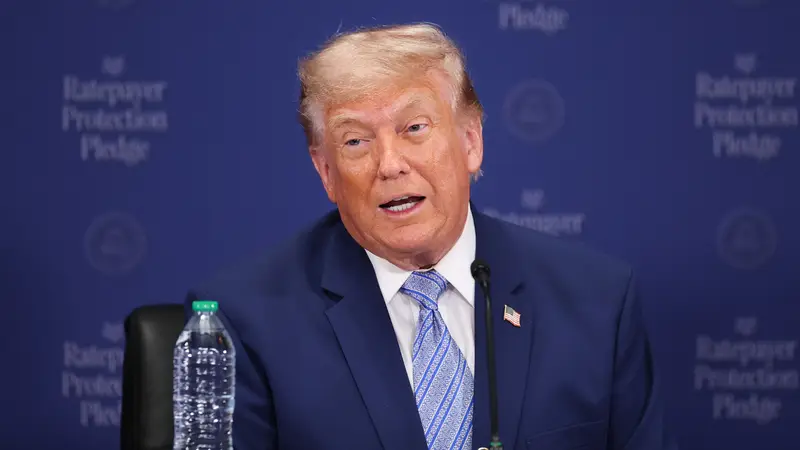
Trump Expands AI Data Center Ratepayer Protection Pledge
President Trump expands AI data center ratepayer protection pledge to include state governors and utility companies, aiming to make electricity more affordable.
I'm watching the news, and it's wild. President Trump is making big moves. He's expanding the AI data center "ratepayer protection pledge" to include state governors and utility companies. This is huge. The White House claims it will make electricity more affordable.
But wait, there's more. Tech companies are resisting efforts to turn this promise into law in California. It's a big deal. The pledge is meant to control spiraling electricity costs driven by AI data centers. I'm curious to see how this plays out.
It's simple. The goal is to make electricity more affordable for American families. But it's not that easy. There are many factors at play. I'll dive into the details and explore what this means for the future of AI and the industry.
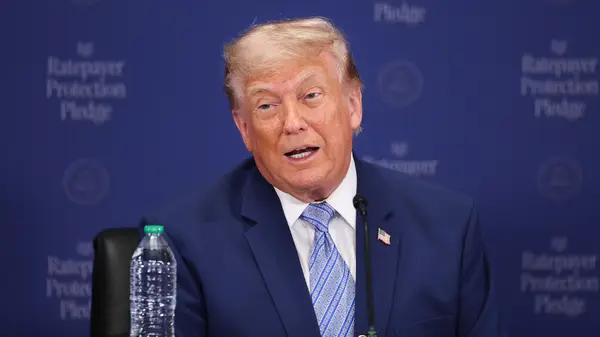
The backstory behind the pledge
President Trump first revealed the "ratepayer protection pledge" in late February during the State of the Union address. He then hosted some of the biggest AI hyperscalers, including Meta, Amazon, and OpenAI, in the White House a week later. The goal was to force them to spend on their own power requirements. This was supposed to help bring electricity costs down.
Energy Secretary Christ Wright said that the pledge "will deliver more affordable, reliable, and secure energy for the American people." The president repeated this promise, saying that electricity bills for American families will come down. But so far, the pledge has had little to no effect on electricity rates across the country.
It's not surprising. The demand for power from AI data centers is massive. PJM Interconnection, the nation's largest power grid operator, slapped Maryland with a $2-billion bill for upgrading its grid to accommodate out-of-state AI data centers. Monitoring Analytics, an independent watchdog, said that the 75.5% increase in power costs in the U.S.'s largest power region has been directly caused by data centers.
The administration is doubling down on the pledge, asking states, utility companies, and data center developers to commit to it. Trump believes that the U.S. needs to win in the "AI race" to maintain its global supremacy, especially as China is neck-and-neck with the U.S. for the technology.
The expansion of the pledge
Now, 23 state governors and 187 utility companies and data center developers have signed the "ratepayer protection pledge." Some of the signers include utility companies NextEra Energy, Duke Energy, American Electric Power, Southern Co., and Pacific Gas & Electric, and data center developers Equinix, Digital Realty, and Prologis.
The pledge is meant to allow the U.S. to have its data centers without punishing the common American with excessive electricity cost increases. But critics say that it's just a promise and cannot be legally enforced. California is trying to pass legislation that will codify these promises into law.
Oregon is the only state to have passed a law that forces developments that use more than 20 megawatts of power to pay their fair share. The POWER Act, which was passed in April 2025, forces the power bills of large electricity consumers to "reflect the true costs of their electric service." Because of this, Portland General Electric (PGE) has increased the data center power bills by 30% while also cutting residential costs by 1.3%.
It's unclear if any of the states that have signed the pledge have similar legislation underway, or what steps the data center developers will take to follow through on their promises. Still, the U.S. president is adamant that states should support data center development within their borders.
The president said, "You have to convince your community. You can't fight it. You have to go with it. If you don't take all that money, somebody else is going to take it. You might as well do it yourselves." It's a bold statement, but it's unclear how this will play out in the long run.
The American public is pushing back against these developments, especially as issues impacting electricity costs, water quality, noise pollution, and more that were caused by data centers are widely reported. Several jurisdictions have applied temporary bans on data center developments, including Seattle and the state of New York.
The technical details of the pledge
The "ratepayer protection pledge" is meant to control spiraling electricity costs driven by AI data centers. The pledge is voluntary, but it's unclear how it will be enforced. The White House claims that it will make electricity more affordable, but critics say that it's just a promise and cannot be legally enforced.
The pledge includes a list of principles that signers must agree to. These principles include a focus on transparency, accountability, and fairness. Signers must also agree to work with local communities to develop data centers that are sustainable and environmentally friendly.
The technical details of the pledge are complex. It's unclear how the pledge will be implemented, or how it will be enforced. But one thing is clear: the demand for power from AI data centers is massive, and something needs to be done to control costs.
The POWER Act in Oregon is a good example of how legislation can be used to control costs. The act forces developments that use more than 20 megawatts of power to pay their fair share. This has resulted in increased data center power bills, but also reduced residential costs.
The future of AI and the industry
The expansion of the "ratepayer protection pledge" is a significant development in the AI industry. It's unclear how this will play out in the long run, but one thing is clear: the demand for power from AI data centers is massive, and something needs to be done to control costs.
The U.S. is in a race to maintain its global supremacy in AI, especially as China is neck-and-neck with the U.S. for the technology. The administration believes that the U.S. needs to win in the "AI race" to maintain its global supremacy.
The future of AI is uncertain, but one thing is clear: it will require massive amounts of power. The industry needs to find a way to control costs, while also ensuring that the technology is developed in a sustainable and environmentally friendly way.
The "ratepayer protection pledge" is a step in the right direction, but it's unclear how it will be enforced. The industry needs to come together to find a solution to the problem of spiraling electricity costs driven by AI data centers.
My honest take on this
I think the expansion of the "ratepayer protection pledge" is a significant development in the AI industry. It's unclear how this will play out in the long run, but one thing is clear: the demand for power from AI data centers is massive, and something needs to be done to control costs.
I'm skeptical about the pledge, though. It's voluntary, and it's unclear how it will be enforced. I think the industry needs to come together to find a solution to the problem of spiraling electricity costs driven by AI data centers.
I believe that the U.S. needs to win in the "AI race" to maintain its global supremacy, especially as China is neck-and-neck with the U.S. for the technology. But I also think that the industry needs to prioritize sustainability and environmental friendliness.
I'm excited to see how this plays out in the long run. The future of AI is uncertain, but one thing is clear: it will require massive amounts of power. I think the industry needs to find a way to control costs, while also ensuring that the technology is developed in a sustainable and environmentally friendly way.