Why We Need A New Sid Meier's Railroads
Looking back at the classic Sid Meier's Railroads! and why this genre needs a modern comeback after twenty years of waiting.
I still remember the first time I laid tracks in Sid Meier's Railroads!. It felt like playing with a high-end toy set that had a sharp, competitive edge. You weren't just building lines. You were carving out an empire on a digital table.
Most games today focus on endless menus or hyper-realistic physics. That's fine, but it misses the point. We need the simple joy of watching a train zip across a map. We need the thrill of outbidding a friend for a local factory.
It's been two decades since this gem hit our screens. The industry has moved on, but I think we left something great behind. It's time to talk about why this game still matters.
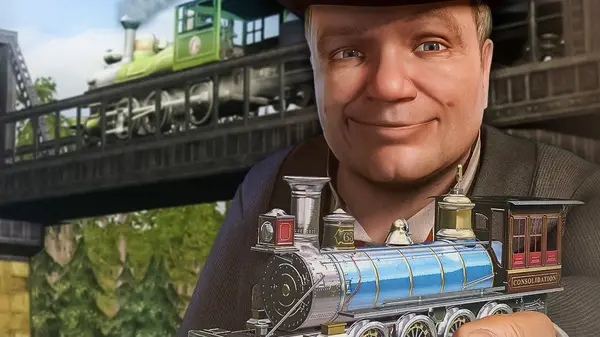
When firaxis played with trains
The early 2000s were a wild time for Firaxis Games. They took classic concepts and gave them a fresh, 3D coat of paint. They looked at Sid Meier's Pirates! and Sid Meier's Railroads! as ways to bring old ideas to a new crowd.
Back then, the studio had a specific magic. They wanted to make games that felt like board games. You didn't need a manual the size of a phone book to start. You just jumped in and played.
This approach gave us a unique mix of charm and strategy. It wasn't about tracking every single bolt on a locomotive. It was about the flow of goods and the heat of the deal.
The game came out in 2006 to a quiet reception. People expected a heavy simulation, but they got a tight, arcade-style strategy title. It was misunderstood, but the people who played it loved it.
More than just moving freight
You start with a small budget and big dreams. The goal is simple. You need to connect towns to industries. Passengers bring in steady cash, but the real money is in moving finished goods.
The map is your playground. You lay tracks, build depots, and watch your trains go. But wait, your rivals are doing the same. If they block your path, you have to think fast. You can't just ignore them.
This is where the game gets sneaky. You can annex industries. You can buy out your competitors' factories. It turns from a peaceful train sim into a cutthroat war for market share.
Auctions are the best part. When a factory comes up for sale, everyone jumps in. You might have to pay double just to keep your rival from getting it. It's a rush. It's pure, digital greed.
The AI is surprisingly clever. They don't just sit there. They adapt to your moves. If you dominate the steel market, they will pivot to something else. They keep you on your toes until the very end.
I think the game shines when you play with friends. A LAN party with this game is pure gold. You can hear your friends groan when you snatch a rail line right from under them.
The tech behind the tracks
The engine used for this title was a massive jump for the team. It handled the terrain and the train movement with a fun, toy-like aesthetic. Everything looked colorful and active. It didn't try to look like a photo, and that was its strength.
Performance was solid for the time. Even on older hardware, the simulation kept up. Managing dozens of trains at once never felt like a chore. The interface was clean and kept the focus on the map.
The game used a server browser that felt dated even back then. That was a big hurdle for multiplayer. Today, we have better tools for connecting, which makes a remaster or a sequel even more viable.
Modding was also a huge part of the life cycle. Fans added new trains and maps for years after launch. It shows that the core design was sturdy enough to support a lot of extra content.
Why a modern revival is necessary
We are stuck in a loop of sequels that try too hard to be huge. We have massive maps and endless grind. Sometimes, I just want a game that lasts two hours and gives me a win.
The market for mid-sized strategy games is wide open. People want games that respect their time. They want deep mechanics without the bloat. Sid Meier's Railroads! proves that less can be more.
A new version wouldn't need to change much. Keep the board game feel. Keep the auctions. Just update the UI and add better netcode. That's all we need.
I think a new generation would fall in love with this. It's accessible, competitive, and fun. It's time to let Sid play with trains again.
Quick questions answered
Is this game still playable on modern PCs? Yes, it runs well on Steam, though you might need to tweak some settings for widescreen support.
Is it a hard simulation? Not at all. It's more of a real-time strategy game than a technical train sim.
Does it have a story mode? It has various scenarios based on real history, but there isn't a traditional narrative campaign.
Can I play against AI? You can add several AI opponents. They are quite competitive and will challenge your best routes.
Why is there an exclamation point? It's a signature style for many of Sid Meier's games. It adds a bit of flair and excitement to the title.
My honest take on this
I think the lack of a proper sequel is a crime. We have seen a million Civilization clones, but very few games capture the specific tension of this railroad title. It occupies a space that no one else is filling right now.
The thing that gets me is the simplicity. You don't need a degree in engineering to play this. You just need a sense of timing and a bit of ruthlessness. That is a rare balance in modern gaming.
I honestly believe that if a smaller studio took this design and polished it, it would be a hit. It doesn't need a massive budget. It just needs the right heart and the right focus on the competitive elements.
I'm tired of games that demand fifty hours of my life to get good. Give me a two-hour session where I can crush my friends in an auction and call it a day. That is the kind of fun I am missing.