AMD K5 Retirement: Why Linux is Dropping Support for Legacy Processors
Linux is ending support for the AMD K5 and other legacy processors in upcoming kernel updates. Learn why this historical chip is being retired.
The tech world often moves at a breakneck speed, leaving old hardware in the dust. We rarely stop to look back at the silicon that paved the way for our modern machines. The news that the AMD K5 is losing Linux support feels like the end of a specific era.
This chip is a time when AMD was just starting to stand on its own feet against the giant. It was a bold move that changed the course of x86 computing forever. Now, the Linux kernel developers are cleaning house to keep their code lean and fast.
History buffs might feel a sting, but this change is necessary for progress. Maintaining support for ancient hardware creates a massive drain on developer time and system resources. Let us look at what makes this chip special and why its time in the kernel has finally run out.
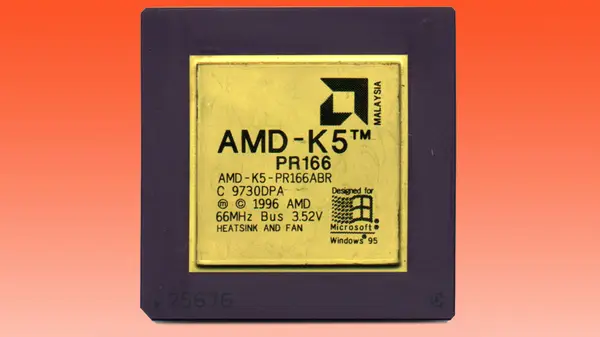
The rise of the first independent AMD processor
Before the K5, AMD largely relied on licensing designs from Intel to keep their business afloat. They built 386 and 486 clones, which kept them in the game but never allowed them to lead. The K5 was their first real attempt to build an x86 processor from scratch.
Released in 1996, the AMD K5 was a big gamble. It used a clever internal design that turned x86 instructions into simpler micro-instructions. This approach was smart, but the chip suffered from production delays that hurt its market position. By the time it arrived, Intel had already moved on to faster parts.
Despite the slow start, the K5 proved that AMD could innovate. It featured 4.3 million transistors, which was a huge number at the time. It did not topple the Pentium, but it kept the company competitive against other rivals like Cyrix. This chip set the stage for the later K6 and the legendary Athlon series.
The technical reason for the linux kernel cut
The primary reason for the K5 being cut from the Linux kernel is its lack of a Time Stamp Counter, or TSC. Modern kernels rely heavily on this feature to track time and manage system performance. Without a TSC, the kernel has to jump through hoops to keep everything running correctly.
Developers recently decided that supporting TSC-less processors is no longer worth the effort. The patch specifically targets Pentium-era variants that lack this hardware feature. Because the K5 belongs to this group, it is being pushed out alongside other ancient hardware like the i486.
The Linux kernel is a massive, complex beast that requires constant care. Every line of code must be maintained, tested, and updated for security. Keeping support for 30-year-old chips like the K5 adds bloat to the kernel. This makes it harder for developers to add new features that modern users need.
Other chips are also facing the chopping block in the Linux 7.2 release. This includes the AMD Elan, an embedded processor that was quite common in industrial gear. The AMD Geode, which served as a low-power solution for years, is also losing official support. These chips were workhorses, but their time has clearly passed.
Understanding the performance rating era
One of the most interesting things about the K5 was how it was sold to the public. AMD used a Performance Rating (PR) system to compare their chips to Intel models. They did this because their clock speeds were often lower than the Pentium chips they were fighting against.
For instance, a K5 running at 116 MHz was marketed as a PR166. This implied that it performed as well as a 166 MHz Pentium. Many users at the time found this confusing, as clock speed was the primary way people judged power. It was a marketing tactic that became a standard for years to come.
The K5 era also marked the time when we started needing active cooling. Before these chips, many processors could run with just a passive metal block on top. The K5 changed that dynamic, making the heatsink and fan a standard part of the PC building experience. We have been dealing with loud fans ever since.
What this means for retro computing
If you have an old machine with a K5, do not panic. Your computer will not suddenly stop working when the new kernel drops. It just means you will be stuck using older versions of Linux that still provide support for your specific hardware.
This is standard practice in the world of retro computing. Most people running a K5 today are doing it for fun or to play old games. They are not using these machines for secure web browsing or modern tasks. You do not need the latest security patches if your machine is not connected to the internet.
The RAMpocalypse and the rise of modern hardware make these old chips feel even more special. We should celebrate these machines as pieces of history rather than trying to make them do modern work. There is a whole community of enthusiasts who keep these systems alive for the sake of nostalgia.
Frequently asked questions
- Will my computer stop working after the Linux 7.2 update? No, your existing system will continue to run fine. You simply will not be able to upgrade to the newest kernel versions.
- Why is the TSC feature so important for Linux? The Time Stamp Counter is a high-resolution timer that modern kernels use to measure performance and synchronize processes efficiently.
- What is the AMD 5k86? It is the official name for the processor family that included the K5. Some users confuse it with the 486, but it is a distinct architecture.
- Can I still use my old PC for offline projects? Yes, these machines are excellent for retro gaming, writing, or learning about how early x86 architecture worked.
- Is Intel also losing support for old chips? Yes, Linux developers have already begun removing support for the i486 and other ancient Intel-based hardware in recent updates.
Expert take: my perspective
I think it is easy to get sentimental about old hardware, but we have to be realistic. The Linux kernel is meant to run the world's most powerful servers and supercomputers. Carrying dead weight from 1996 does not make sense anymore.
The thing that gets me is how much history is buried in these lines of code. Every time a dev removes support for a chip, they are essentially closing a book on a chapter of computing. I respect the effort to keep the kernel clean, but it is still a bit sad to see these legends fade away.
I remember when chips like the K5 were the absolute peak of what a home user could buy. We thought we had reached the limit of speed. Now, my phone has more power than a thousand of those chips combined. It puts the pace of our tech progress into perspective.
I believe the best way to honor these chips is to keep them running in offline, air-gapped environments. Do not try to force them to run a modern browser. Let them be what they were meant to be: solid, simple machines that do one thing well.