Can Aptera Finally Deliver Its Three-Wheeled EV?
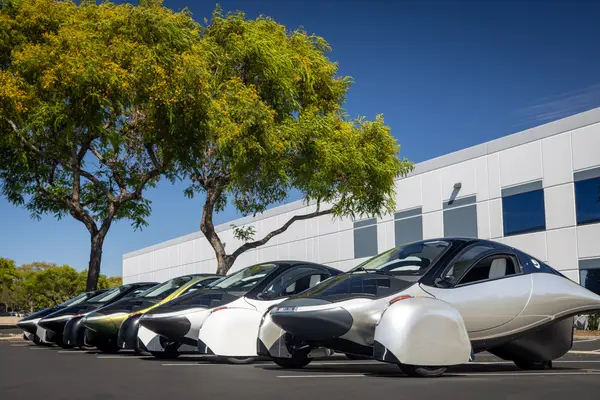
Aptera has built its first five validation models in California, marking a potential turning point for the long-delayed three-wheeled electric vehicle.
It's been a long haul for Aptera. They've been chasing a dream since 2006. Most people would have quit by now. Yet, they keep pushing forward with their three-wheeled electric vehicle project.
You might wonder if this is just vaporware. It's a fair question after two decades of waiting. We've seen countless startups vanish into thin air. But something feels different this time around.
They just finished building their first five validation models. These cars rolled off a real assembly line in Carlsbad, California. It's a small step, but it's real progress. Let's look at why this matters for the future of cars.
Two decades of chasing the dream
The history of Aptera is a wild ride. The original team started back in 2006. They wanted to build a super-efficient car. It wasn't just about speed. It was about pure efficiency.
Things didn't go as planned. They hit a wall in 2011 when funding dried up. The government loan programs didn't cover three-wheeled designs back then. It forced them to pivot to four wheels. That didn't work out either.
The company basically went dark for years. Then, in 2019, the founders came back. They brought the idea back to life. They returned to the three-wheel concept. It's been a rocky road, but they're still here.
Inside the carlsbad assembly line
The new factory in Carlsbad is the heart of the operation. It's not a massive plant. It's a low-volume line designed for precision. They have 14 stations that every car must pass through.
Building five cars is a test of their process. It's not just about the car itself. They're testing the system. Each car teaches the team something new. They're refining every bolt and wire.
Chris Anthony, the co-CEO, says this is key. Every build makes the team sharper. They're gathering data in real time. This helps them fix issues before they reach customers. It's a smart way to scale up.
Steve Fambro, the other co-CEO, agrees. He says they're building the system to build the cars well. Precision is the goal. They want to make sure the final product is perfect. Consistency is hard to master.
They have nearly 50,000 reservations. That's a huge number for a niche vehicle. People clearly want something different. They want to move away from the standard car mold.
The team is working hard to meet these expectations. They know the pressure is on. They aren't just selling a car. They're selling a promise of efficiency.
Specs that defy the norm
The Aptera looks like a spaceship. It doesn't look like anything else on the road. The front wheels are mounted out wide. They sit in aerodynamic pods. This design is all about cutting through the air.
The drag coefficient is a tiny 0.13. That's incredibly low. It beats almost every car ever made. This shape helps it sip power. It's why they can hit such long ranges.
They claim 400 miles of range from a 44 kWh pack. That's massive efficiency. They're also adding solar panels to the body. You can get up to 40 miles of range from the sun alone. That's a game changer for daily commutes.
It's also surprisingly wide. It's wider than a Hummer EV. That's a weird fact, but it's true. It might make parking a bit tricky. But the efficiency gains are likely worth the hassle.
What this means for the EV market
Can they pull this off? That's the big question. They have a solid design. They have a working assembly line. Now they need to reach production scale.
The market is crowded with big players. Tesla and Ford have massive budgets. Aptera is doing it differently. They're focusing on a niche that others ignore. That's their biggest strength.
If they succeed, it proves a point. You don't need a massive factory to innovate. You just need a clear idea. They've stuck to their guns for 20 years. That kind of focus is rare.
We'll see if they can start deliveries soon. They've been close before. This time feels different. The process is finally moving.
Common questions about the aptera
How many people fit in the car? It's a two-seater. It's built for one or two people and their gear.
Does it really get 400 miles of range? That's the target for the launch edition. The low drag helps them achieve it.
Is it legal to drive on the highway? Yes, it's designed to be a fully capable road vehicle.
Why only three wheels? It reduces weight and drag greatly. It's the secret to their high efficiency.
When can I buy one? They haven't given a firm date. They're focusing on finishing the validation phase first.
My honest take on this
I think Aptera is one of the most interesting projects in the industry. It's easy to call them vaporware. They've certainly missed enough deadlines to earn that label. But I respect the grit.
Most car makers are just making bigger, heavier EVs. Aptera is going the other way. They're proving that we can do more with less. I love that approach. We need more radical designs on the road.
The thing that gets me is the solar panel tech. If that works as promised, it's a huge win. Imagine never plugging in for a short commute. That's the future I want to see.
Honestly, my take is that they'll struggle to scale. Building five cars is easy. Building fifty thousand is a nightmare. I hope they make it, but the road ahead is still very steep.