Speed Up Your 3D Printer With A Nintendo Switch
A YouTuber hacked their 3D printer using a Nintendo Switch and Klipper firmware to reach insane speeds. Here is how they did it.
We all have that one dusty console sitting in a drawer. Maybe it's an old handheld or a console you don't play anymore. Most of us just let them collect dust. But one person decided to change that.
They turned a Nintendo Switch into a brain for a 3D printer. It sounds like a strange dream. Yet, it's real.
The results are frankly wild. They boosted print speeds by a massive 1000%. It's a total game changer for anyone tired of waiting for long prints.
Why old consoles make good brains
Most 3D printers rely on simple, weak chips. These chips act like a basic calculator. They struggle to handle complex math while moving motors at high speeds. This is where the bottleneck happens.
The firmware inside most printers is called Marlin. It's reliable but limited. It isn't built to process heavy data streams. When you ask it to do too much, the print quality drops.
Think about how a Raspberry Pi changed the hobby. It gave users a way to offload tasks. Now, people are looking for other ways to get that same power. A handheld console is just a small computer, after all.
The switch to faster prints
YouTuber Cocoanix took the plunge. They installed Linux on their Nintendo Switch to get this working. It wasn't just a simple plug-and-play move. It took some serious technical grit.
They used Klipper firmware. This software is the secret sauce here. It takes the heavy lifting away from the printer's own board. The Switch does all the complex math instead.
The handheld sends commands to the printer in real time. Because the Switch is so much faster than a standard printer board, it can handle way more speed. It also keeps the motion smooth.
A print that took 90 minutes dropped to eight. That's not a typo. It's a massive jump in efficiency. You can see the difference in the final parts, too.
They noticed less ghosting and ringing. These are common issues when you push a printer too hard. By offloading the math, the printer stays precise even when it's moving fast.
It's a clever use of hardware. Instead of letting a console sit idle, they gave it a new life. It's a win for the printer and a win for the desk space.
Pushing the hardware to the limit
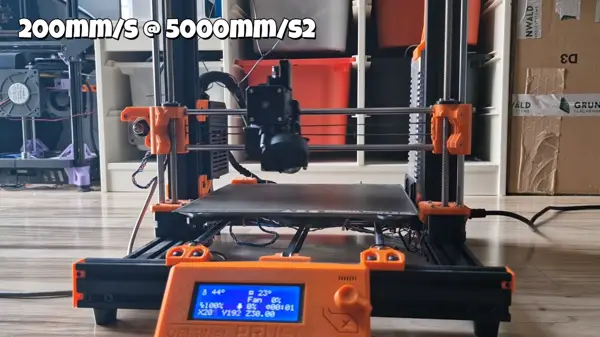
How fast can it go? Cocoanix hit 400 mm/s. The acceleration was set to 17,000 mm/s2. These numbers are huge for most consumer machines.
The printer itself eventually became the limit. The hotend and cooling couldn't keep up with the speed. The Switch was ready for more, but the plastic couldn't melt fast enough.
You don't need a Switch to do this, though. A Raspberry Pi is usually the smarter pick. It's cheaper and easier to set up for most people.
But the point stands. Klipper is a beast. If you have an old printer, this is the best way to make it feel brand new.
The future of DIY printing
What does this mean for the future? It shows us that we don't always need new machines. We just need better brains for the ones we have.
This trend of offloading tasks will keep growing. People love to squeeze more performance out of their gear. It's the heart of the maker community.
Could we see more console hacks? Probably. As long as people have spare hardware, they will find ways to repurpose it.
It's not for the faint of heart. You need to be comfortable with Linux and terminal commands. But for those who try, the rewards are clear.
Common questions about this hack
Can I do this with any Switch? You need a model that can run custom firmware. Not every version of the console is compatible with this.
Is Klipper hard to learn? It takes time. You have to edit config files. It's not as simple as the default setup on most printers.
Does it damage the printer? It can. Pushing motors and belts that fast causes wear. You have to be careful with your machine.
Is it worth the effort? If you print a lot, yes. If you only print once a month, it might be overkill.
Where do I start? Look up the Klipper docs. They are very detailed. The community is also very helpful for beginners.
My honest take on this hack
I think this is the coolest thing I've seen in a while. It's not about the Switch being the best tool for the job. It's about the spirit of the hack.
I love seeing people push hardware past its intended use. It reminds me why I got into gaming and tech in the first place. We should always be asking what else our gear can do.
Honestly, I wouldn't recommend this as a primary setup. It's too much work for a daily driver. A Raspberry Pi is just more stable and easier to manage.
But for a weekend project? I'm all in. If I had a spare console, I'd try it today. It's a fun way to learn how your printer thinks.