Understanding the Ebola Outbreak and Its Global Impact
A deep dive into the recent Ebola outbreak in the DRC and Uganda, covering the virus strain, health response, and the challenges faced by local authorities.
I remember when we used to think of viral threats as things from sci-fi movies. It felt like those stories stayed on the screen. But reality hits different when you read the news today.
The latest report coming out of the Democratic Republic of the Congo is sobering. It isn't just another headline. It's a massive health crisis that demands our full attention right now.
We need to look at the facts behind this surge. It's moving fast. It's affecting real people in real time. Let's break down exactly what is happening in the region.
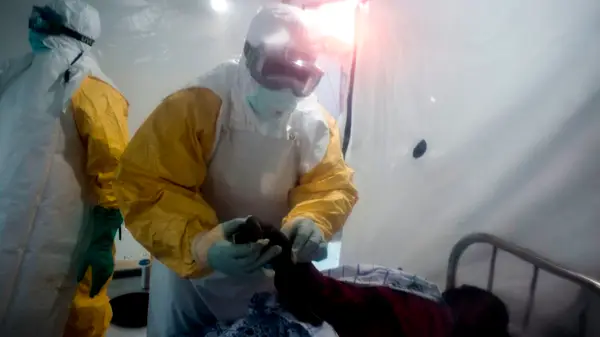
A history of fighting the virus
The Democratic Republic of the Congo has seen this before. Since 1976, they have battled this disease seventeen times. It's a long, hard fight for the people living there.
Most of those past outbreaks were the Zaire strain. Scientists knew how to treat that one. They had vaccines ready. They had a plan. This time is very different.
The current situation in Ituri province feels like a new beast. It's hitting hard and spreading across borders. The speed of the spread is what scares experts the most.
The latest crisis in the DRC
Officials confirmed the outbreak this past Friday. The numbers are already high. We are looking at 246 suspected cases. That is a massive number for such a short window.
Sixty-five people have lost their lives. That's a tragedy that hits home for families in the Mongwalu and Rwampara zones. It's a grim reality for these communities.
The virus didn't stay in the DRC. It crossed into Uganda. One case is now confirmed in Kampala. This means the risk for the whole region just went up.
Why is this happening now? The area is busy. People move for mining work constantly. That makes stopping the spread a total nightmare for health teams on the ground.
Militia groups also control parts of the land. This makes it hard to track who has been near the sick. If you can't trace the contacts, you can't stop the chain.
The Africa CDC is working overtime. They are trying to coordinate with South Sudan too. They know the virus might jump borders again. It's a race against time.
What makes this strain different
The big worry is the virus strain. It doesn't look like the Zaire type. Lab results are still coming in, but early signs point to Bundibugyo.
This matters because of the tools we have. Our current vaccines target the Zaire strain. If this is a different version, those shots might not work as well.
That complicates everything for doctors. They need new gear and new plans. The National Institute for Biomedical Research is doing the heavy lifting to sequence the DNA now.
Looking ahead at the response
The World Health Organization sent help on May 5. They know this is big. They just released $500,000 to get supplies where they are needed most.
The US CDC is also lending a hand. They have offices in the region. They are providing technical support to local teams. It's a global effort to contain this.
We have to watch the border crossings. If the movement of people doesn't slow down, the virus will keep traveling. It's a simple, painful truth of this outbreak.
Quick questions answered
Is there a vaccine for this? The current vaccines were built for the Zaire strain, so we aren't sure how well they work here.
How many people have died? As of now, the count is 65 deaths in the DRC.
Why is this outbreak harder to stop? The urban setting and constant travel of mining crews make it very hard to track.
Has it reached other countries? Yes, one case is confirmed in the Ugandan capital, Kampala.
What is the WHO doing? They have sent teams and gave $500,000 in emergency funding to help the local ministry.
My honest take on this
Honestly, the thing that gets me is the delay in communication. Why did it take so long for the news to reach everyone? We need faster systems.
I think the urban spread is the scariest part. When a virus hits a city, it moves through crowds. It doesn't stay in the woods. That changes the game entirely.
I feel for the health workers on the front lines. They are dealing with militia fights and a new virus strain at the same time. That is an impossible job.
We should be doing more to support them. It isn't just about money. It's about getting the right science into their hands before the virus takes more lives.